


The 7 Principles of Interior Design (and How to Apply Them in Your Home)
Interior design can seem like a mysterious art, but at its core, it’s governed by a set of fundamental principles that, when understood, can transform any space. Whether you’re a seasoned decorator or just starting to personalize your home, these seven principles will guide you in creating beautiful, functional, and inviting interiors.
1. Balance
Balance in interior design refers to the visual distribution of weight in a room. Just like a seesaw, you want elements to feel equally distributed, creating a sense of equilibrium and stability. There are three main types of balance:
- Symmetrical Balance: This is the most formal type, achieved by placing identical items on either side of a central axis. Think of two matching lamps flanking a sofa or a pair of nightstands on either side of a bed. This creates a sense of order and calm.
- Asymmetrical Balance: This is more dynamic and involves balancing different objects with similar visual weight. For example, a large sofa on one side might be balanced by two smaller armchairs on the other, or a tall plant might balance a wide console table.
- Radial Balance: This occurs when all elements are arranged around a central point, like chairs around a dining table or artwork radiating from a central light fixture.
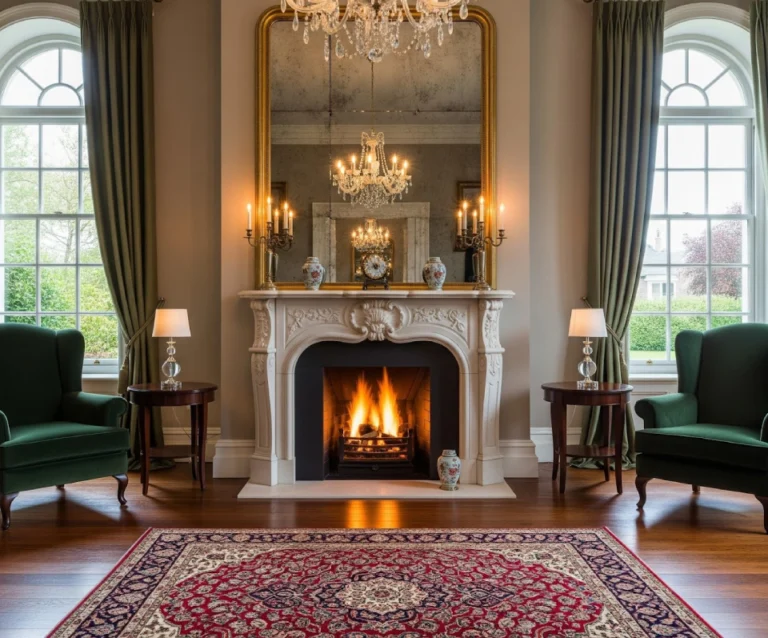
To apply balance in your home, consider the size, shape, and color of your furniture and decor. A heavy piece of furniture might need a collection of smaller items to balance it out visually.
2. Harmony
Harmony is about creating a sense of unity and cohesion in a space. It’s achieved when all elements, including colors, textures, shapes, and styles, work together seamlessly to create a pleasing whole. Harmony often involves repetition and a consistent theme.
Imagine a room where the colors are all from the same family, or the textures are complementary. This creates a peaceful and inviting atmosphere. Conversely, a lack of harmony can make a room feel chaotic and disjointed.
Element | Example of Harmony | Example of Disharmony |
|---|---|---|
Color | A palette of blues and greens | Bright neon colors with earthy tones |
Texture | Smooth velvet sofa with a shaggy rug | Highly varied textures with no commonality |
Style | Mid-century modern furniture throughout | Mixing Victorian and minimalist styles |
To achieve harmony, choose a dominant style or theme and ensure your selections support it. Repeat colors, patterns, or textures throughout the room to tie everything together.
3. Contrast
Contrast is the opposition of elements, creating visual interest and preventing a room from feeling flat or monotonous. It can be achieved through differences in:
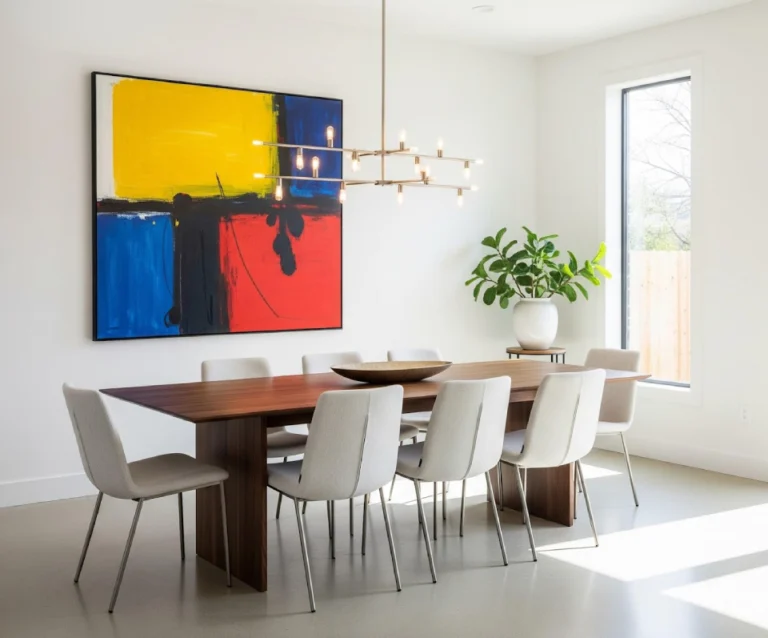
- Color: Light walls with dark furniture, or a bright accent color in a neutral room.
- Texture: A rough brick wall paired with a smooth leather sofa.
- Shape: A round coffee table contrasted with a rectangular rug.
- Size: A large piece of art above a small console.
Contrast adds excitement and depth to a space. However, it’s important not to overdo it, as too much contrast can lead to a busy and overwhelming environment. The goal is to create visual interest without sacrificing harmony.
4. Rhythm
Rhythm in interior design is about creating a sense of movement and continuity, guiding the eye through a space. It’s achieved through repetition, progression, and transition of elements.
- Repetition: Repeating a color, pattern, or object throughout a room. For example, a consistent color used in throw pillows, artwork, and accessories.
- Progression: Arranging elements in increasing or decreasing order of size, color intensity, or height. Think of a gradient of colors on a wall or varying heights of candles on a mantel.
- Transition: Using a continuous line or curve to lead the eye from one area to another. An archway or a curved sofa can create this effect.
A rhythmic space feels fluid and inviting, encouraging the eye to explore.
5. Emphasis (Focal Point)
Every well-designed room needs a focal point – a dominant element that immediately draws the eye and anchors the space. This could be a dramatic fireplace, a stunning piece of art, a large window with a beautiful view, or a uniquely designed piece of furniture.
Once you’ve identified your focal point, arrange other elements to complement and support it, rather than competing with it. The goal is to highlight this special feature.
To create an effective focal point:
- Size and Scale: A larger, more prominent item naturally becomes a focal point.
- Color and Contrast: A bold color or a contrasting texture can make an element stand out.
- Placement: Centrally placed items or those at the end of a long vista often draw the eye.
6. Proportion and Scale
Proportion and scale refer to the relationship between the size of objects in a room and the size of the room itself, as well as the relationship between objects and a person.
- Proportion: This refers to the way elements relate to each other in terms of size, shape, and quantity. Good proportion ensures that no single element overwhelms another or the space as a whole.
- Scale: This considers the size of objects in relation to the human body and the overall space. A tiny sofa in a vast living room would feel out of scale, just as a giant chandelier in a small entryway would.
It’s important to consider both the individual size of an item and how it fits within the context of the entire room. Furniture should be appropriately sized for the space and comfortable for those who will use it.
7. Details
Details are the finishing touches that bring a room to life and reflect the personality of its inhabitants. These are the smaller elements that add character and depth, such as:
- Accessories: Throw pillows, blankets, vases, sculptures, and decorative objects.
- Lighting: Lamps, sconces, and overhead fixtures that provide both function and ambiance.
- Artwork: Paintings, prints, photographs, and wall hangings.
- Textiles: Curtains, rugs, and upholstery fabrics.
While seemingly small, details are crucial for completing a design. They allow you to infuse your personal style and create a truly unique and inviting space.
By understanding and applying these seven principles, you’ll be well on your way to creating interior spaces that are not only beautiful but also harmonious, balanced, and perfectly suited to your needs and preferences. Experiment with these concepts and discover the transformative power of good design in your own home!